
The YouTube Quality Gap
YouTube is getting harder. Should you care?

I’m back - after 1.5 years!
If you need a refresher, my name’s Gwilym - I’m a YouTube strategist and creative director.
I grew Bryan Johnson from 70k to 2M subs as Head of YouTube, and was previously lead scriptwriter for Ali Abdaal.
This is where I share my insights about YouTube strategy.
Yes, there’s still demand for longform content.
But YouTubers are under pressure from two directions:
more creators than ever are flooding the platform, increasing supply
YouTube is funneling views away from Longform to Shorts, shrinking demand.
The Longform Squeeze is on.
So, what to do?
Big creators are reacting as you’d expect in a crowded market:
developing formats with better budget-to-views ratios
diversifying (funnelling to email, building products, posting on other socials)
pushing to make 5-10% better videos.
All stuff they wanted to do anyway, except now it feels more urgent.
But what about channels struggling to crack 500 views per video, despite posting for months?
What should they do about the Squeeze?
My honest advice: Nothing.
If you’re a small creator who wants to be competitive on YouTube, don’t spend your time reading think pieces about the “state of YouTube”.
What you need to do is fix your shit.
This was true before the Squeeze, and it’s true now.
There’s likely a huge Quality Gap between you and the handful of successful creators in your niche who are getting the results you want.
Your job is to close that gap as quickly as possible.
In my experience, 90% of the time this comes down to solving four major issues.
ONE: Know your Value Proposition
Do you REALLY have an unfair advantage in the niche you’re going for?
This could be:
access to unusual people or experiences
an unusual skill
an unusual personality or perspective.
Also - are enough people interested in your topic?
Ideally:
there’s a pre-existing community that’s interested in your topic
creators are already succeeding in your niche (or an adjacent one).
There is a school of thought that says: “Just start, publish videos. You’ll find yourself along the way.”
That works for some people.
But if you’re thinking “I want results sooner rather than later” then for God’s sake:
play to your strengths
verify there’s an audience for your videos.
On the topic of improving quickly:
Are you a UK-based creator?
I’m running an intensive, full-day YouTube workshop in London this Saturday 7th February.

It’s with two of the best strategists I know (George Blackman and Jamie Whiffen).
Our goal: to help you make more strategic progress in one day than you would in 6 months on your own.
We have 3 seats left, and sales close TODAY, Tuesday 3rd Feb at 11:59pm GMT.
TWO: Fix your damn setup.
Unintentionally bad production quality is viscerally felt by everyone watching.
This sounds like obvious ‘YouTube 101 advice’.
But there are MILLIONS of small YouTubers spending HOURS filming videos, getting ‘advanced scripting advice’, and agonising over performance…
…all while using a shitty $20 mic with peaking audio. Or filming against a blank white wall that makes them look like they’re being held hostage.
This isn’t a gear issue. It’s lack of self-awareness.
Look up mic recommendations from creators like Oliur or Tyler Stalman. Research “good lighting”. Screenshot your setup and compare it to creators whose style you like.
You don’t need “stunning production value” - just video and audio that won’t make your target audience click away.
THREE: Don’t be confusing
Are you alienating your potential audience by jumping between unrelated video topics?
Let’s say you make videos about effective studying.
It’ll be much harder to get traction if you constantly flip between that and:
a podcast with your friends
tips for teaching better
a random vlog of your trip to Africa.
Here’s an easy test (lifted from my friend George Blackman).
Look at your last 5 videos.
Would someone who watched the first video feel like the next 4 were also created for them? Or would they be confused?
YouTube rewards bingeable video catalogues.
FOUR: Study your comps
I often talk to small channel owners who have an incredible work ethic… but are only vaguely aware of the most successful creators in their niche.
To most experienced YouTube operators, this sounds insane. That’s because it is.
Study your comps. At least three or four.
Ask yourself:
what do you like about their videos?
what would you do differently?
what formats are working for them?
This is the master shortcut to getting better at everything on YouTube, because it builds taste and understanding.
For example: instead of designing what you think might be a “good enough” thumbnail in isolation, you’ll put it next to three competitors, get an uncomfortable feeling in your stomach, and go back to the drawing board.
Closing the Quality Gap is (usually) that simple.
Implement these 4 fixes, and you’ll have a channel that:
Gives people a clear reason to subscribe
Feels consistently good to watch
Is always improving.
OK, but you might be thinking: “What about [insert zany experimental creator] who breaks all these rules?”
Here’s the caveat: those creators are usually either a) very savvy and/or b) have hit on a new format.
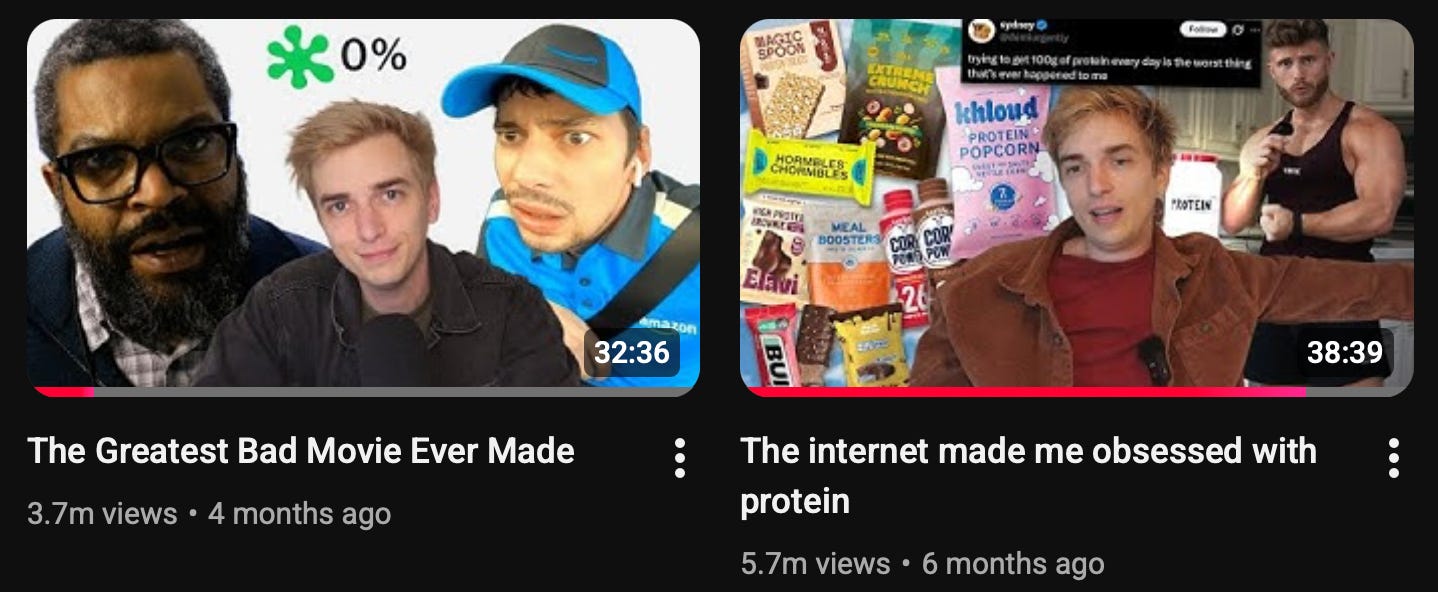
Drew Gooden can get away with:
half the screen above his head being a white wall
‘crappy’ thumbnails
posting a video about protein one day and something completely random the next.
That’s because his value prop is irreverent comedy and hot takes.
His ‘low effort’ aesthetic is part of the bit.
But when a YouTuber earnestly giving tax advice has the same setup and thumbnails, it reads as ‘untrustworthy’ or ‘clueless’.
That’s all for today. Hit reply if you have any questions.
Gwilym
P.S. For no-nonsense advice on improving production quality, I highly recommend this video by Tyler Stalman.
- Cover image credit: Mario Joos
I need more of this G-Money wisdom.